Cruise Ship Time vs. Port Time: What First-Timers Get Wrong
Your phone may flip to island time in port while the ship runs on ship time — and all-aboard is always ship time. Here is how to avoid the panic sprint back to the pier.
Understand cruising basics before you commit to a fare.

The moment your watch and the gangway disagree
You are halfway through a jewelry shop in port. Your phone just jumped ahead an hour — or maybe it did not. The shopkeeper says closing time is soon. The pier feels farther away than it did at breakfast.
This confused me at first, too. Cruise ships do not run on "whatever time my phone says." They run on ship time, and all-aboard is always announced in ship time. Miss that by an hour and you are not late for dinner. You are late for the ship.
Here is the simple version: ship time is the clock the captain sets for the whole vessel. Port time is whatever the island or city uses ashore. They are often the same. When they are not, the gangway clock wins.
Ship time in one sentence
Ship time is how the cruise line schedules meals, shows, muster drills, and — most importantly — when you must be back onboard.
The captain may match local time in each port, or keep one time for the whole sailing so crew schedules do not yo-yo. Carnival, Royal Caribbean, and Norwegian all do this differently port to port. That is normal.
What does not change: the daily planner in your cabin, the screens by the elevators, and the sign at the gangway all show ship time. Treat that as law.
When port time drifts from ship time
The classic first-timer trap is a one-hour gap on winter Caribbean sailings.
Example: you leave Miami in December on Eastern Standard Time (UTC−5). Your ship calls St. Martin, which does not observe daylight saving and stays on Atlantic Standard Time (UTC−4) year-round. Ashore it might be 2:00 p.m. when the gangway still reads 3:00 p.m. ship time. All-aboard at 3:30 ship time is not 3:30 on the watch you bought in the port mall.
Phones make it worse. Many auto-switch to local time the moment you hit the pier. Helpful for lunch reservations on land. Dangerous for counting down to all-aboard.
Europe and Alaska can get more complicated — multiple time changes on one itinerary. If this is your first sailing and it is a short loop from Florida, you might never see a change all week. Do not assume that. Read the planner every evening anyway.
What to do before you step off
Before you leave the ship on a port day:
- Check tonight's planner for clock changes overnight.
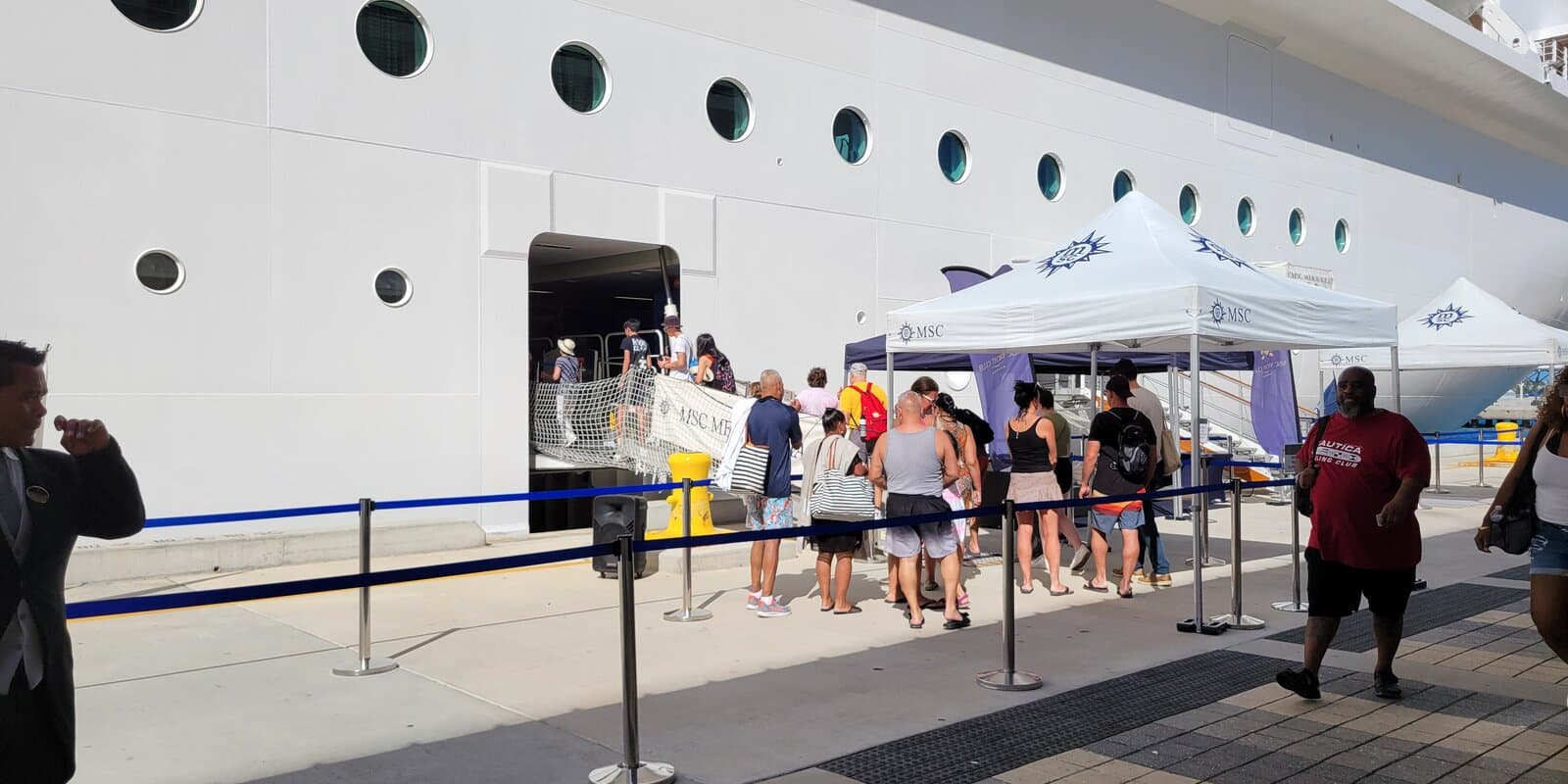
- Read the gangway sign for ship time and all-aboard (usually 30–60 minutes before sail-away).
- Set a manual alarm on your phone for ship time — or leave the phone on ship time and wear a cheap watch set to local time if you prefer.
- Screenshot the all-aboard time. Cell service in port is unreliable.
If the difference between ship and port is one hour, say it out loud to anyone you are traveling with. "We need to be at the pier when the gangway says 3:30, not when your phone says 2:30."
Independent tours and meeting times
Booked a van tour through a local operator? They almost always think in local time.
Tell your guide on the spot: "Our ship's all-aboard is X p.m. ship time." Reputable operators near cruise piers know the drill. If they look blank, show them the gangway photo on your phone.
Ship-sponsored excursions list meeting times in ship time because the cruise line runs the schedule. That is one reason beginners like them — less mental math. Independent tours can save money, but you own the clock math.
Before you book your first sailing
You do not need a PhD in time zones to book a cruise. You do need to know this exists.
Before you pay:
- Skim your line's FAQ on ship time (search "ship time" on Carnival, Royal, or NCL's help pages).
- On port days, trust the gangway, not the souvenir shop clock.
- Budget an extra 30 minutes back to the ship on your first call — nerves and wrong watches eat margin.
Once your head is around ship time, compare sailings from your homeport with the full trip cost in mind — fare, taxes, gratuities, and the extras you actually want.
Miami sailings to practice your first port day
Live pricing · Updated dailyShort Caribbean loops are where ship-time surprises show up first.
More from Stop Looking Start Booking