
Inside Cabin With Kids: Smart Savings or Vacation Regret?
An inside cabin can free budget for excursions and dining — or leave everyone overtired in a small room. Here is how to tell if the savings fit your kids’ ages, sleep habits, and ship choice.
Plan a family cruise that fits your budget and schedule.

Why families ask about inside cabins
The first fare you click is almost always an inside cabin — no window, lowest category, biggest gap to a balcony. For families, that price gap can mean hundreds per person, which is real money you could put toward excursions, a pre-cruise hotel night, or simply staying inside budget for spring break.
Parents should check this before booking: inside is not wrong, but it is a trade. You are swapping natural light and a view for square footage that is usually the same as an ocean-view room on the same ship — just without the window. For some families, that trade is painless. For others, it becomes the thing everyone complains about by day three.
For families, convenience matters just as much as price. If your kids still nap, wake at dawn, or need a calm place to decompress after the pool, the cabin matters more than the brochure photo suggests. This may look like a small detail, but it can change the whole trip.
What to check on the ship and itinerary
Before you lock an inside fare, pull up the ship's deck plans and family stateroom page for your line. Carnival, Royal Caribbean, and Norwegian all list which categories sleep three or four, whether upper bunks pull down, and where connecting cabins sit if you need two rooms.
Kid programs and hours matter on inside-cabin weeks. If your children are happy in camp until dinner, you will spend less daylight in the room. If they are too young for drop-off or they tire early, you will feel the cabin size every evening.
Itinerary pace plays a role too. Port-heavy weeks from Miami mean you are off the ship most days; an inside cabin can feel like a place to shower and sleep. A sailing with two sea days back-to-back means more waking hours in the room — that is when families notice the lack of a window and the smaller feel.
Also scan virtual balcony or interior promenade categories on newer ships. They cost more than a classic inside but less than a real balcony, and they give kids something to look at without paying for outdoor square footage.
Cabin layout and sleep reality with kids
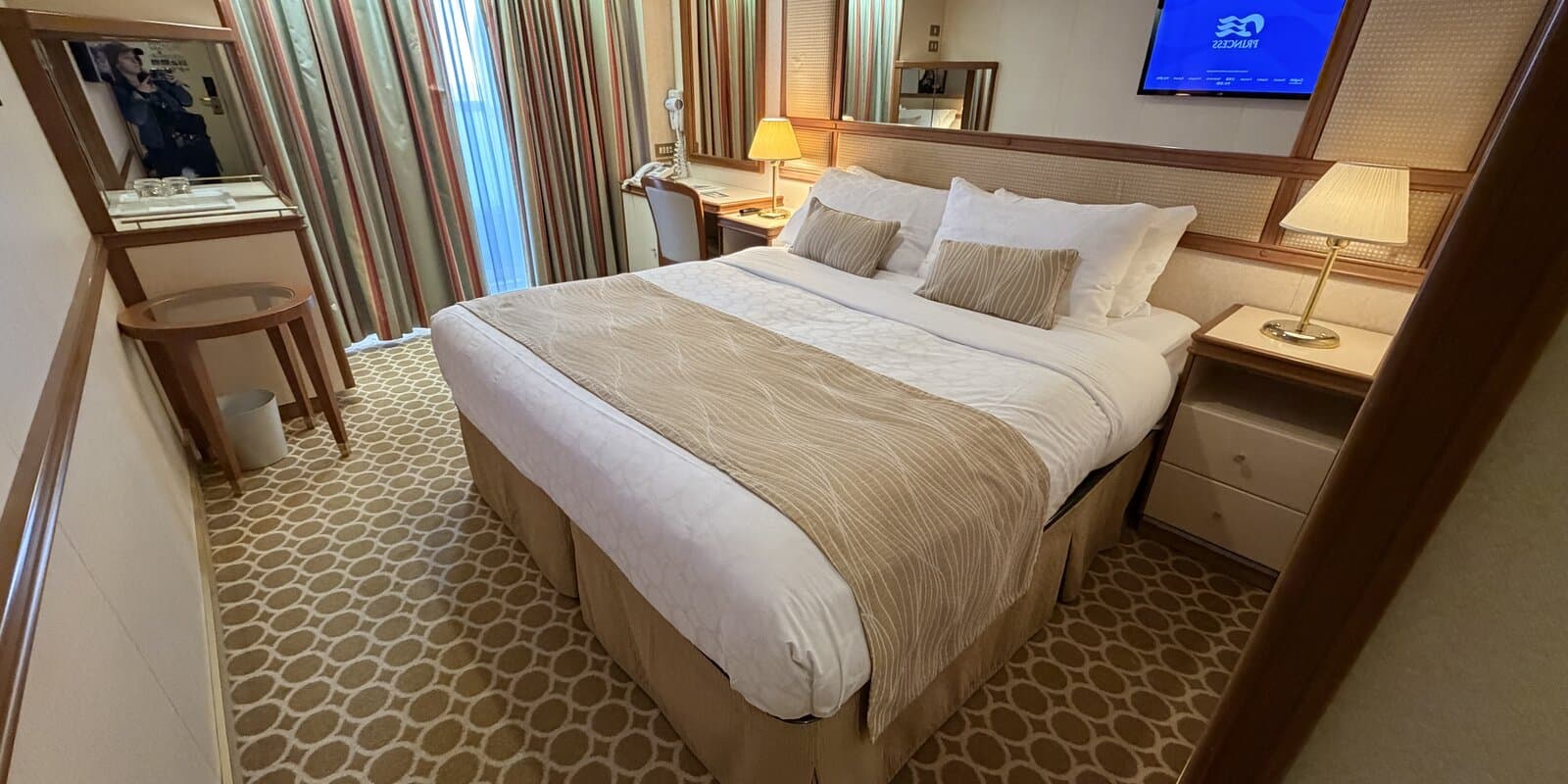
Standard inside cabins on mainstream ships are often 150–170 square feet — roughly a compact hotel room. Most sleep two adults on a queen or two twins, plus one or two children on a sofa bed or upper bunks. A family of four in one inside is legal on many sailings, but it is tight.
Walk through the sleep math honestly:
- One child, elementary age or older: Often fine if everyone adapts to shared space and you use the room mainly at night.
- Two kids on bunks: Works when bedtime routines align; tricky if one is a night owl and the other needs darkness at 8 p.m.
- Teens: Privacy becomes a real issue; connecting insides or one inside plus one ocean view can save relationships.
- Toddlers and babies: Nap schedules and early bedtimes make no window harder — you are guessing whether it is morning or night, and hallway light under the door can leak in.
Bathroom size is the other surprise. Shower-only wet baths are common. Fine for a long weekend; tiring on a seven-night cruise with four people rotating through.
If anyone snores, packs a white-noise machine, or needs a pack-and-play, measure the floor plan on the line's site before you assume "inside will do."
Budget and stress tradeoffs
Here is how the savings usually stack up on 4-night-or-longer Caribbean sailings from Miami: inside fares often sit well below ocean view and much below balcony for the same week. Multiply that by three or four guests and you might fund two shore excursions, a drink package for adults, or a pre-cruise parking and hotel bundle.
The stress side is less visible on the invoice:
- Clutter and laundry with four people in one room
- No natural wake-up cue — everyone sleeps late and misses breakfast, or kids wake early and turn on every light
- One bathroom during get-ready time before port
- Less "reset" space on sea days when the ship is crowded
Run a whole-trip budget, not just cabin tier. Our guide to what is actually included in a cruise fare helps you see where cabin savings can go — and what still costs extra (gratuities, Wi-Fi, specialty dining).
The best family cruise is the one that fits your schedule, budget, and energy level. If saving on the cabin lets you book the right length sailing and one splurge day ashore, inside can be smart. If saving on the cabin means everyone arrives overtired and cranky, you did not save — you shifted the cost to the vacation itself.
Miami family sailings (4+ nights)
Live pricing · Updated dailyCompare inside, ocean view, and balcony fares on the same ship and week.


When to spend up (and when inside is enough)
Inside is often enough when:
- Kids are old enough to share sleep space without meltdowns
- You have multiple port days and a busy ship schedule
- You have booked connecting cabins for a split party but want to keep total fare low
- You care more about line, dates, and itinerary than cabin view
Spend up to ocean view, balcony, or a family category when:
- Anyone struggles in small or windowless rooms on land
- You have two or more sea days and expect ship time in the cabin
- You are traveling with a baby, toddler, or light-sensitive sleeper
- Teens need space or a second room — connecting cabins beat one cramped inside
- Motion or seasickness is a concern — a midship lower deck ocean view sometimes helps more than a forward inside
You do not need the most expensive suite on the ship. Sometimes the right move is one category bump for the whole family, or two insides side by side instead of four people in one room.
When you have a sense of your cabin tier, compare Miami sailings with the same dates and ship — inside, ocean view, and balcony — so you see the real spread before you commit. A few minutes of comparison beats guessing from the lowest tile on the homepage.
More from Stop Looking Start Booking