
Kid-Friendly Cruise Ships: What Families Should Compare Before Booking
Amanda Ellis on comparing kid-friendly cruise ships: youth-program age bands on Carnival, Royal Caribbean, and NCL, ship energy, and what parents should verify before searching fares.
Plan a family cruise that fits your budget and schedule.

Why ship choice matters more than headline price for families
You are on the phone with a grandparent. One thumb is on a Royal Caribbean Icon-class deck plan. The other is toggling Carnival's Camp Ocean schedule. The question: can your 20-month-old use any supervised program so both adults get one dinner alone this sailing?
That is not a picky detail. It is the difference between a relaxing sea day and one parent eating room service while the toddler hunts elevator buttons.
Most family cruise shopping starts with fare tiles — Caribbean, Miami, whoever looks cheapest per person. Parents should check this before booking: the same region and price band can feel completely different on Carnival, Royal Caribbean, and Norwegian because youth-program age cutoffs and ship energy do not match across lines.
For families, convenience matters just as much as price. A lower fare on a ship where your toddler is too young for drop-off, or your teen has nothing to do after 9 p.m., is not a bargain. It is a long week. Match kids to programs first; compare prices second.
Youth-program age bands: Carnival vs Royal Caribbean vs NCL
Brochure pages make every line look kid-friendly. Age bands tell the real story.
Carnival Camp Ocean serves kids ages 2–11 in supervised groups: Penguins (2–5), Stingrays (6–8), and Sharks (9–11). Circle C covers 12–14; Club O2 serves 15–17.
Royal Caribbean Adventure Ocean runs ages 3–17, split into younger through teen subgroups on each ship. Royal Babies & Tots handles 6–36 months on select ships with nursery options.
Norwegian uses Guppies (6 months to under 4), Splash Academy (3–12), and Entourage (13–17).
Walk through a common split: family of four, kids ages 3 and 11.
On Carnival, both kids qualify for Camp Ocean. The 3-year-old lands in Penguins; the 11-year-old is in Sharks. Same program building, different daily schedules — one drop-off window does not always cover both.
On Royal Caribbean, the 3-year-old enters Adventure Ocean while the 11-year-old sits in the 9–11 Voyagers band. Siblings are supervised, but not in the same room at every hour.
On NCL, both may overlap in Splash Academy (3–12), while the 3-year-old may also use Guppies during certain sessions — a different rhythm than Carnival's single Camp Ocean umbrella.
Same Caribbean week. Three different daily routines. This may look like a small detail, but it can change the whole trip when you have two kids and one sea day with no port escape hatch.
Infants and toddlers: who has supervised care under age 3
Under age 3 is where families get surprised at check-in.
Carnival Camp Ocean starts at age 2. A 20-month-old on Carnival has no drop-off kids club — parents plan around naps, the pool deck, and tag-team dinners.
Royal Caribbean Adventure Ocean starts at age 3, but Royal Babies & Tots (6–36 months) and nursery services exist on select ships. Not every vessel in the fleet offers the same nursery hours or fees — verify your exact ship before deposit, and do not assume the nursery is free or unlimited.
NCL Guppies covers 6 months to under 4 with parent participation required in many sessions. Splash Academy opens at 3. That overlap can help a family with a toddler who just turned three, or frustrate one with a 22-month-old who still naps twice daily.
If your goal is one adults-only dinner, nail infant and toddler rules before you pick a line. Nursery availability often matters more than the headline water slide.
Teens, tweens, and ship energy
Teen clubs exist on all three lines. Ship size and energy still split families.
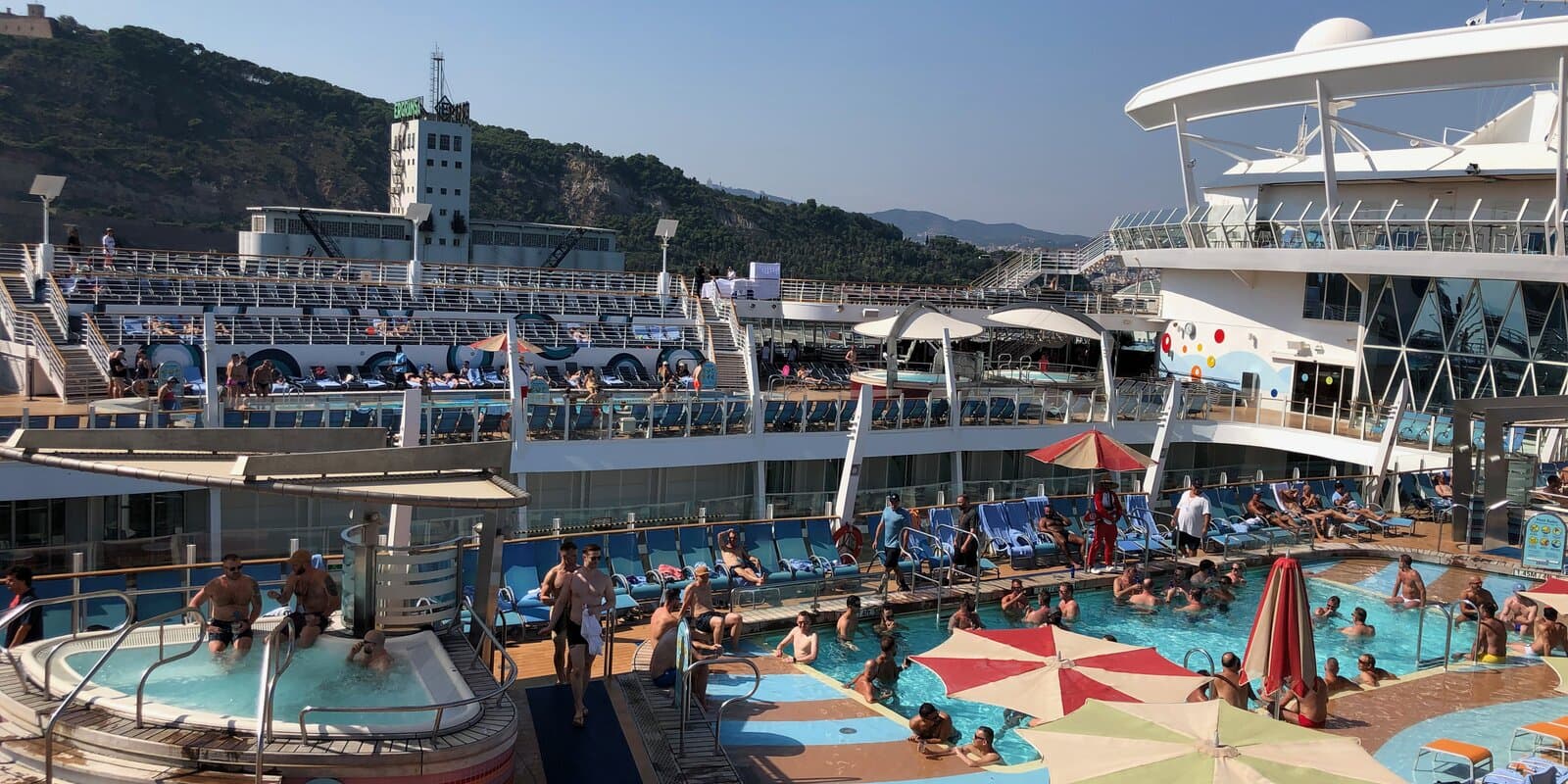
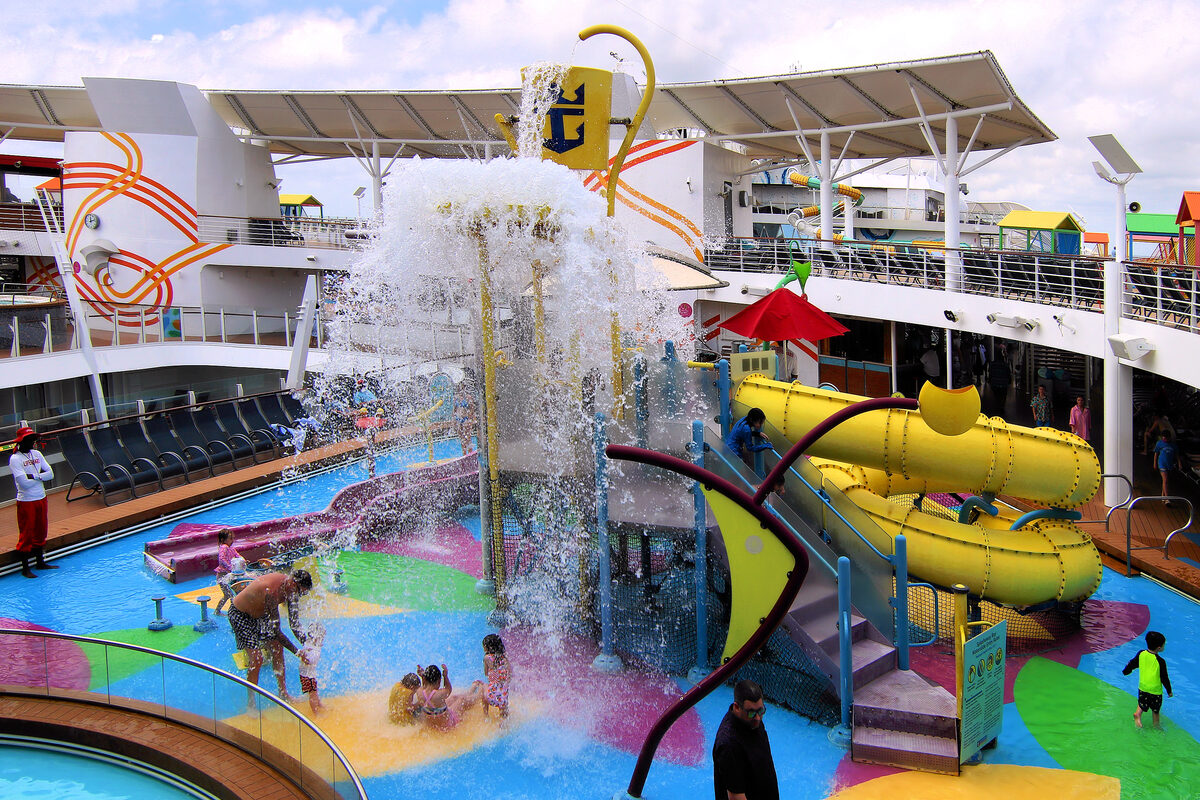
Carnival leans fun-ship — busy pool decks, lively public spaces, Camp Ocean through Club O2 coverage from 2–17 on family sailings. Royal Caribbean's newest ships — Icon of the Seas, Utopia of the Seas, and others marketed heavily to families — pack surf simulators, bigger splash zones, and more teen-thirsty hours. That energy helps active tweens; it can overwhelm a family that wanted calmer dining pace.
Norwegian spreads programs across Guppies through Entourage with flexible dining on many sailings — useful when grandparents join and no one eats at the same speed.
A quieter seven-night ship with solid Entourage hours may beat the biggest headline attraction if your teen actually wants to sleep past 8 a.m. Our multi-generation family cruise planning guide covers grandparent pace and cabin spread once you shortlist a line.
When comparing family cruises, check total trip cost — flights, pre-cruise hotel, gratuities — not headline per-person fare alone.
Miami Caribbean family sailings (4+ nights)
Live pricing · Updated daily789 packages from $286 — open each itinerary to confirm ship, youth programs, and total trip cost.

Checklist before you search fares
Run this once before you open a fare search:
- Age on embarkation day — match each child to Camp Ocean subgroups, Adventure Ocean bands, or NCL Guppies / Splash Academy / Entourage.
- Under-3 care — confirm drop-off minimums and nursery availability on your exact ship, not the line in general.
- Teen coverage — Circle C / Club O2, RC teen areas, or Entourage hours that fit your kids' sleep schedule.
- Ship energy — waterpark-heavy newbuild vs smaller ship; who in your group needs calm vs stimulation.
- Cabin and dining next — our connecting cabins booking guide and family cruise dining with kids guide pick up once the line fits.
Families with medically complex kids, severe allergies requiring dedicated kitchen protocols, or children under 6 months may need direct line calls and specialist advice. This guide compares mainstream youth programs on big-ship Carnival, Royal Caribbean, and Norwegian — not disability services, medical escort, or niche expedition ships.
The best family cruise is the one that fits your schedule, budget, and energy level. When age bands and ship energy align, search Caribbean sailings by homeport, nights, and dates — then compare the full trip cost.
More from Stop Looking Start Booking