
Panama Canal Cruises: Partial vs Full Transit and Which Itinerary Fits Your Trip
Partial and full Panama Canal transits are not the same trip — compare lock days, sailing length, flights, and port pacing before you book.
Choose a route that matches the vacation you want.

What partial and full transits actually do in the canal
A couple in Fort Lauderdale compares two eleven-night sailings on the same line. One is labeled "partial Panama Canal transit." The other is a standard Caribbean loop. The canal sailing adds a full lock day — and still returns them to the same airport at the end.
That label difference is where most shoppers get stuck. "Panama Canal cruise" can mean two genuinely different route shapes.
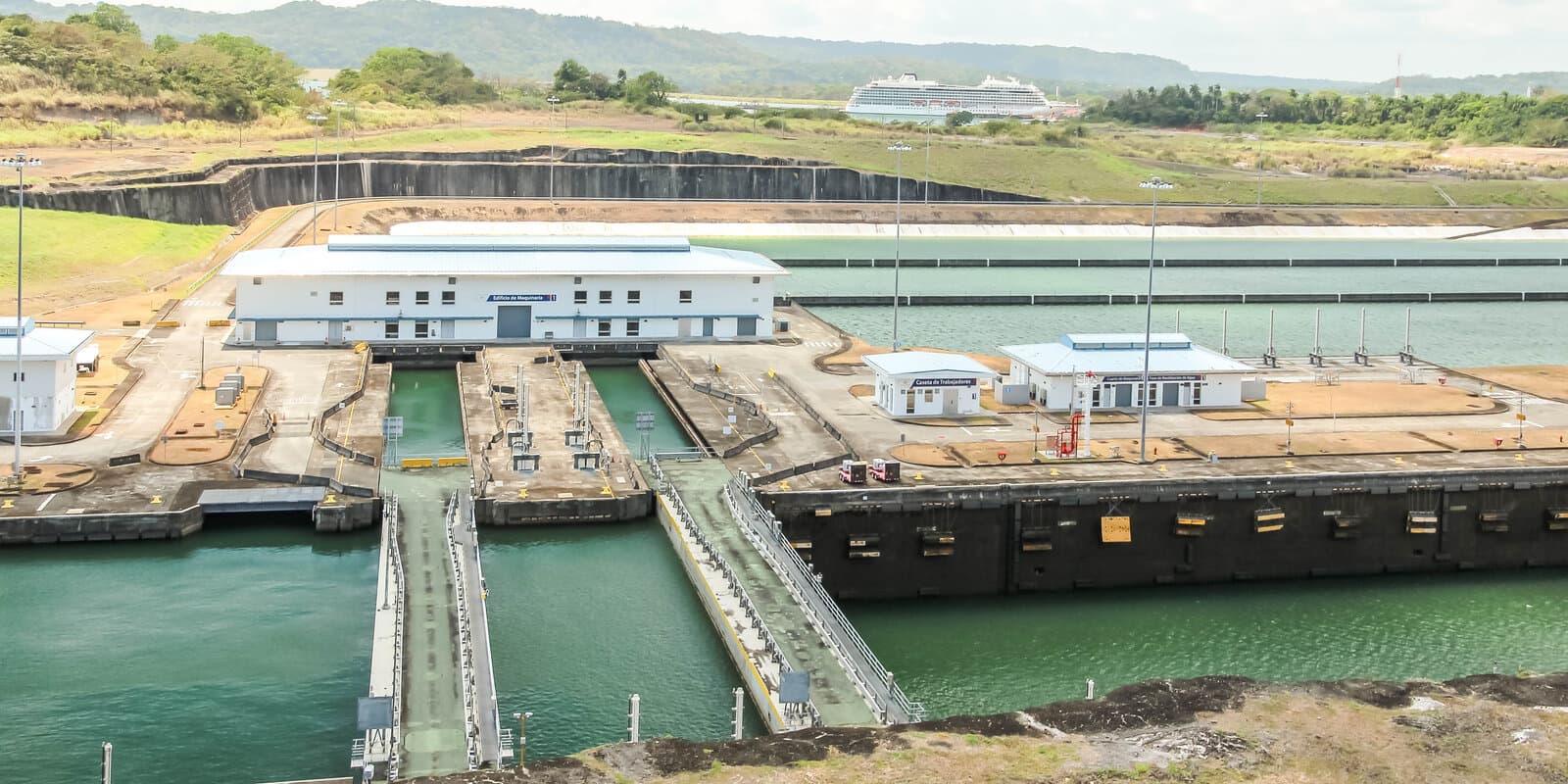
A full transit carries your ship ocean to ocean. You enter from the Atlantic or Pacific side, pass through the lock systems — Gatun, Pedro Miguel, and Miraflores on classic routes — cross Gatun Lake, and exit into a different ocean. Princess Cruises describes the crossing as roughly ten hours of canal time on transit day. You start in one homeport region and finish in another.
A partial transit still puts you inside the engineering — but the ship turns around. It enters from one side (often Limon Bay on the Caribbean/Atlantic approach), transits selected locks, reaches Gatun Lake, then reverses and exits the same ocean it entered. Cruise Critic notes you experience the Caribbean-side locks twice and do not reach the Pacific side.
Neither option is a "lite" version of the other. They are different itinerary architectures. The ports tell you a lot about the kind of cruise this will be — and on canal sailings, the transit type sets the whole trip's flight math.
How long each sailing type usually runs
Canal cruises run longer than a typical seven-night Caribbean loop — but partial and full are not separated by a neat "short vs long" split.
Partial transits on mainstream lines are commonly ten or eleven nights, often round-trip from Florida gateways such as Fort Lauderdale or Miami. The Points Guy notes the shortest Fort Lauderdale partial transits at eleven nights. You get canal day plus Caribbean port stops before and after, with sea days woven through the week.
Full transits on mainstream ships are typically fourteen nights or longer. They frequently operate as repositioning sailings between Florida and California — Miami or Fort Lauderdale to San Diego, Los Angeles, or San Francisco, or the reverse. Cruise Critic warns that full crossings include more sea days and reward travelers who enjoy a slower pacing rhythm.
Season timing matters too. Panama Canal deployments generally run from late August through May, with heat that eases somewhat in winter months but never disappears entirely. If you are shopping summer Caribbean habits, canal season is a different calendar.
Look closely at arrival and departure times on the port list — an eleven-night partial with three sea days back-to-back feels nothing like an eleven-night partial stacked with Western Caribbean calls. Our Western Caribbean port-days comparison helps decode those ashore days when they appear on partial-transit loops.
Flights and homeport logistics
This is where the itinerary choice becomes real money and real stress.
Partial transits usually embark and debark at the same Florida port. You can book round-trip airfare, drive if you are within range, and treat the canal day as a highlight inside a familiar loop. Cruise Critic specifically calls out that advantage for travelers who want easier logistics.
Full transits start and end on opposite coasts. A Miami-to-San Diego sailing means one-way flights — or a cross-country repositioning flight on your own dime at one end. Even travelers who live on a coast often face at least one long-haul domestic segment. The cruise fare line item can look attractive on a per-night basis; the air package may not.
Full transits also overlap with repositioning cruise logic — low per-night fares, more sea days, one-way routing. If that framing is new, Mark Bennett's repositioning cruises for first-timers walks through repo basics without repeating them here. The planning fork is similar: can your calendar and flight budget absorb a one-way trip?
Before you compare cabin categories, sketch the full trip cost: pre-cruise hotel if you fly in early, one-way vs round-trip air, and ground transfers at both ends on a full transit.
Which transit type fits which traveler
Choose a partial transit if you want canal lock day inside a Florida round-trip, prefer round-trip or drive-to airfare, and still want Caribbean port variety on the same sailing. This route is better for travelers who want the engineering spectacle without rebuilding their entire flight plan.
Choose a full transit if ocean-to-ocean is the goal, you can handle fourteen-plus nights away, and one-way coast-to-coast flights do not scare you off. You will see all three lock systems and exit into a new ocean — the complete crossing Princess and Cruise Critic both describe as the bucket-list version.
Pause before either if you mainly want beach-heavy port days and minimal sea time. Even a partial canal sailing dedicates a long transit day to locks and canal viewing. A standard seven-night Caribbean loop may fit better. Not all eleven-night sailings feel the same — but canal-focused weeks prioritize the waterway over maximizing tender ports.
Families with school calendars often land on partial transits because the round-trip Florida structure is easier to pair with holiday weeks. Retirees with flexible calendars and flight points sometimes favor full transits when they can chain a California land stay onto the debark.
The value here depends on how much time you actually get ashore versus how much you care about the canal itself. There is no universal winner — only a better fit for your map.
Which transit type should you book?
Start with transit type, not headline fare. Filter longer sailings from your preferred Florida homeport for partial options, or coast-to-coast repositioning routes for full crossings. Open the day-by-day schedule on each finalist and confirm whether the canal day is partial or full — lines print this in the itinerary description, but the port list alone will not always spell it out.
Verify lock-day excursions separately. Some partial transits tender guests ashore at Gatun Lake for Panama tours while the ship transits — a different rhythm than staying on deck for the full chamber sequence. Excursion availability changes by line and season.
Once the route shape matches your calendar, flights, and lock-day expectations, fare comparison gets cleaner. The right pick is the transit type that fits how you travel — not the tile with the lowest cabin price before logistics.
More from Stop Looking Start Booking