

3-Night vs 7-Night First Cruise: Which Length Actually Makes Sense for Beginners
First cruise? Mark Bennett compares 3-, 4-, and 7-night sailings on what you actually experience after embarkation day — not just which fare looks cheaper.
Understand cruising basics before you commit to a fare.

You filter Miami sailings by lowest price and land on a 3-night weekend cruise. Embarkation day eats the morning. Muster drill wraps up. You finally find a quiet spot on the pool deck — and realize you are already counting down to disembarkation.
This confused me at first, too. I booked the cheapest short sailing before I understood that cruise length shapes what you learn on board, not just what you pay. The headline fare on a weekend getaway looks manageable. The vacation days and port count behind that fare matter more on a first trip.
Here is the simple version: length is a learning-curve question. Royal Caribbean markets 3-day weekend cruises as quick Caribbean getaways. A 7-night loop buys more port and private-island time after the same Day-one routine. Pick the length that matches your goal — sampler ship test or full port week — then compare fares.
Why cruise length matters more than the headline fare on a first trip
Every sailing shares the same fixed costs on travel day: drive or fly to the homeport, terminal security, document check, boarding, muster drill. Those steps do not shrink because you booked fewer nights.
On a 3- or 4-night sailing, Day one is mostly setup. Day two might be your only relaxed pool afternoon before the ship turns back toward Florida. The fare looks like a bargain until you count paid time off and flights against two full vacation days at sea.
Carnival still requires proper travel documentation at embarkation whether you sail three nights or seven. Guests without proper documents will not be allowed to board, and no refund of cruise fare is issued. Docs are not a short-cruise shortcut — our first-cruise mistakes checklist covers what to verify before you lock any length.
Our embarkation day timeline walks through why Day one feels long. That timeline is the hidden tax on short sailings.
What a 3- or 4-night sailing actually gives you after embarkation day
Royal Caribbean's weekend getaways hub describes 3-day Caribbean sailings aimed at travelers who want a quick island escape without using a full week of vacation days.
Picture the pattern after muster: one strong port or private-destination day, maybe a partial second day at sea, then the terminal again. You sample the ship — dining, pool, maybe one show — but you do not settle into the rhythm repeat cruisers talk about.
4-night sailings add a little breathing room. You still lose most of embarkation day to logistics. You gain an extra port call or sea morning compared with a three-nighter. For nervous first-timers who only want to know if cruising fits their family, that extra night can be the difference between "we liked it" and "we never got our bearings."
Short sailings work when your goal is test the product, not see the Caribbean. If island-hopping is the dream, a long weekend may leave you hungry.
What changes on a 7-night loop (ports, sea days, and recovery time)
Same embarkation and muster routine. Different math afterward.
On a typical 7-night Western Caribbean loop from a Florida homeport, you often pick up three or four port or private-island days instead of one — even when the headline fare is higher than a weekend tile. Carnival publishes Caribbean cruise options from U.S. homeports across short and weeklong sailings; the weeklong itineraries simply stack more calls after the Day-one overhead.
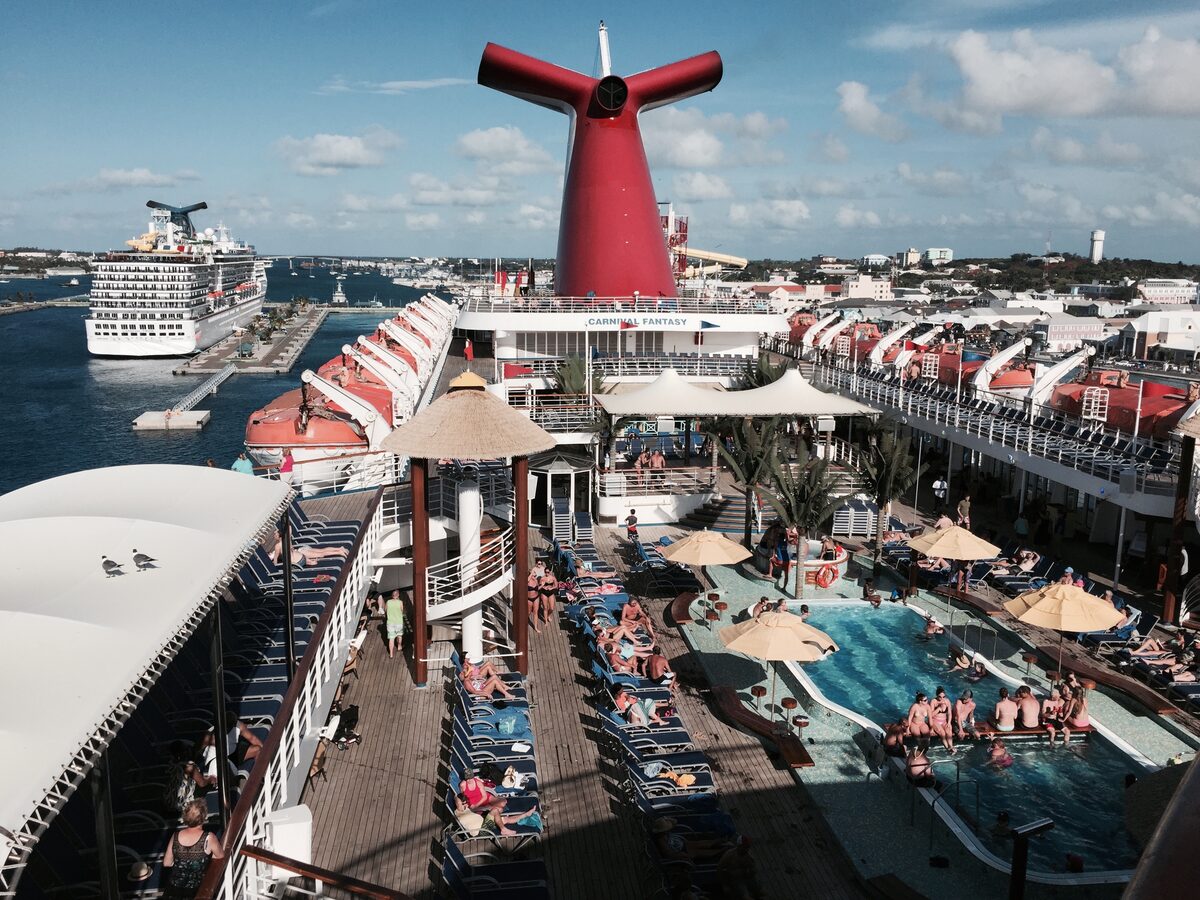
Sea days become features, not filler. You recover from a late port night. Kids find the kids' club. You learn which deck has the quiet breakfast. That pacing is why many first-timers who loved a three-night sampler rebook a week within a year.
Tradeoff: a week costs more calendar — five to seven workdays for many offices — and the total fare is usually higher than a three-night teaser. You are buying time, not just nights.
Who should book short, who should book a week, and who should wait
Book short (3–4 nights) if you want a low-commitment test, live driving distance to Miami, Port Canaveral, Fort Lauderdale, or Galveston, and your party tolerates a tight schedule. Good for "will we get seasick?" and "do we like the line?" questions.
Book a week (7 nights) if ports matter, you need a real reset, or you are flying in and already burning two travel days. The extra nights amortize embarkation day across more experiences.
Wait or rethink if you cannot finish online check-in and gather documents before travel day, or if you are comparing fares before you know whether you want a ship sampler or a port-heavy week. Deal-minded readers should read Rachel's price-per-night comparison after you pick a length — she does the fare math; this post is about experience.
If you already cruise twice a year and know whether you prefer sea days or port days, you do not need this explainer. It is aimed at mainstream closed-loop Caribbean first-timers from Florida and Gulf homeports — not Alaska or transatlantic sailings where length decisions involve flights, visas, and different port spacing.
Pick your length, then compare fares
Decide whether you want a cruise sampler or a full port week. Filter search results to that night count. Open each itinerary and count port calls after Day one — not just the lowest tile on the page.
Royal Caribbean's first-time cruiser planning hub is worth bookmarking once you have a length in mind: ships, destinations, and pre-sail basics in one place. Do not talk yourself into a fare that fits the calendar but not the goal.
When length fits your vacation days and your learning goal, compare sailings with docs and budget already handled — then booking is a search problem, not a guess.
More from Stop Looking Start Booking